Sixty seconds. That’s roughly how long you have between noticing water spraying from a burst pipe and the moment drywall starts soaking through your ceiling. Most homeowners don’t know where their main shutoff valve lives until that minute is already ticking. Here’s the thing: you don’t need to be a plumber to save your house from thousands of dollars in water damage. You just need to find one valve, learn how to turn it, and know the three situations when you absolutely should.
Why Every Homeowner Needs This Skill Before Something Breaks
The American Red Cross reports that a frozen pipe can burst with enough pressure to release over 500 gallons of water in a single day, which is enough to flood an entire floor of an average home. Most of that damage happens in the first fifteen minutes, before anyone thinks to call for help.
Think about what that means for your own house. You’re standing in the kitchen, water is cascading from under the sink, and your phone is in your pocket. The difference between a mop-up job and a full restoration project is whether you can find that valve and twist it shut while you’re still calm. That’s the whole ballgame right there.
Your local utility company expects you to know this too. The EPA notes that household leaks account for nearly 10,000 gallons of wasted water per home every year, and a single burst pipe can multiply that number in an afternoon. Shutting the water off fast isn’t just about protecting your floors. It’s about stopping waste the moment it starts.
Where Is Your Main Water Shutoff Valve?
This is the part where homeowners get stuck. The valve is rarely where you think it is, and it definitely isn’t labeled with a neon sign. Start with these five places, in this order:
- Basement or crawl space: Look along the wall where the water line enters your house, usually near the front or side. It’s typically on the street-facing side, about chest height, with a pipe running straight into the foundation.
- Garage: If your house sits on a slab, the main valve is often along the interior garage wall, sometimes behind stored boxes or a workbench.
- Utility closet: Condos and townhomes frequently hide the valve near the water heater or in a dedicated mechanical room.
- Outside near the foundation: In warmer climates, you’ll find a covered box or a curbside meter pit with a valve you can operate with a special key.
- Under the kitchen sink: This is the worst-case scenario. Some older homes only have a shutoff at the meter and a local valve under the sink.
Once you find it, test it. Turn it clockwise until it stops, then open it back up. Valves that haven’t moved in a decade seize up, and discovering that at the exact moment you need it is the worst kind of surprise. A stuck valve is a problem you want to find on a Saturday afternoon, not during a flood.
Step-by-Step: How to Shut Off Your Water in 60 Seconds
You’ve found the valve. Water is still spraying. Here’s the exact sequence, no wasted motion:
- Tell everyone in the house: Shout it once so nobody flushes a toilet or runs a faucet while you’re working. Water hammer in a draining system can shake pipes loose.
- Grab a flashlight and a wrench: Even if the valve has a handle, keep a wrench within reach in case it’s a round knob that needs a tool, or the handle breaks.
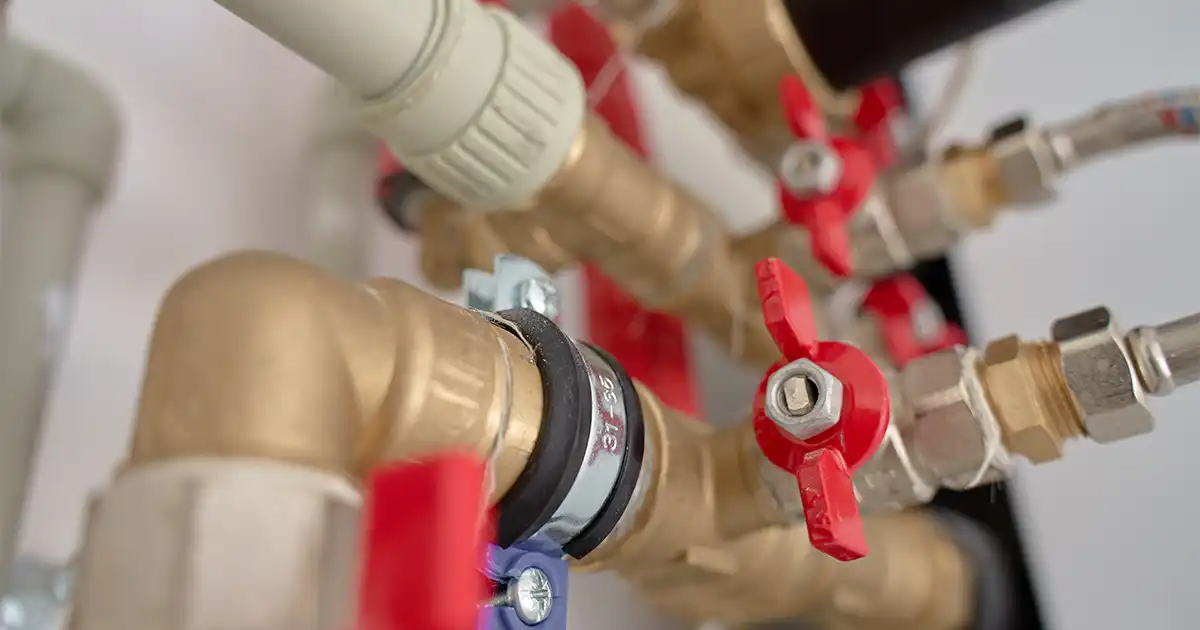
- Turn clockwise until it stops: For a gate valve, that’s several full turns. For a ball valve, it’s a single quarter turn. You’ll feel a solid stop when it’s closed.
- Open the lowest faucet in the house: Usually the basement sink or an outdoor spigot. This relieves pressure in the lines and drains the remaining water so it stops spraying from the break.
- Check the leak: If water keeps flowing from the burst spot, you have a second valve further back, or the main valve is failing, and you need professional help immediately.
That’s it. Five steps, about a minute of your time, and you’ve gone from emergency to manageable. The National Association of Home Builders reports that roughly one in five homeowners who experience a major leak says they couldn’t locate their shutoff valve quickly, which is exactly why practicing this drill once a year matters. The Red Cross recommends you locate and label your shutoff valve as part of your household disaster plan, and they’re right.
When to Shut It Off vs. When to Call a Professional
Not every leak needs the nuclear option. Shut the main valve off immediately for these three situations:
- Burst or split pipes: Any pipe that’s actively spraying water needs the main valve closed, period.
- Water heater failure: If your water heater is leaking from the tank itself, shut off the water supply to the unit (usually a small valve on the cold inlet pipe) and then call for help. A burst tank can release dozens of gallons in minutes.
- Major fixture failure: A toilet that’s overflowed for ten minutes or a supply line that’s detached from a washing machine counts.
For smaller issues, a dripping faucet or a slow drain leak, you can usually get by with the local shutoff valve under the sink or behind the toilet. The main valve brings the whole house down, and it’s overkill for a minor weep.
Once you’ve shut the main valve, the job isn’t done. A home can usually survive a few hours without water, but a long-term shutdown affects your hot water heater (it shouldn’t run dry), your well pump if you have one, and your family’s basic needs. That’s when you need a professional to find the root cause and get things flowing again. If you’re in the Greater Cincinnati area and the damage is beyond a simple valve turn, calling an emergency plumber in Cincinnati, OH, is the right next move, because a temporary shutoff is a bridge, not a destination.
What to Do After the Water Stops
The water is off. The spraying has stopped. Now you’re in a race against a different clock: mold. The National Association of Home Builders reports that mold can begin developing on wet drywall and wood within 24 to 48 hours, which means your cleanup window is short.
Start by mopping or vacuuming standing water with a wet/dry vacuum. Pull up any soaked area rugs and move furniture off wet carpet. Point fans at the affected area and, if the weather allows, open windows to increase airflow. You’re not trying to dry the house in an hour; you’re trying to buy yourself time so the repair crew doesn’t have to tear out more than necessary.
Document everything. Take photos of the leak, the water level, and the damaged area before you clean up. Your insurance adjuster will want that evidence, and having it makes the claim process dramatically smoother.
Build Your 30-Minute Emergency Routine
Here’s the part most guides skip: the practice. Shutting off your water once, today, doesn’t mean you’ll remember it in the chaos of a real emergency. You need a routine that builds muscle memory. Here’s mine:
- Label the valve: Tie a red or orange tag to the handle that says “MAIN WATER SHUTOFF.” You’d be shocked how often people forget what it is when they’re panicking.
- Test it every six months: Turn it off, turn it on, done. Two minutes twice a year.
- Show your family: Everyone over the age of twelve should know how to do this. If you’re not home when something breaks, someone needs to step in.
- Keep a wrench in a known spot: The same drawer every time, not the junk drawer that eats tools.
It’s boring. It’s completely unglamorous. And it’s the difference between a bad afternoon and a catastrophic one. You don’t need to become a plumbing expert; you just need to be able to find that one valve with your eyes closed and turn it without thinking.
So here’s the question: do you know where your main shutoff valve is right now? Not where you think it is, but where it actually lives? If you hesitated for even a second, that’s your answer. Go find it, test it, and tag it this weekend. Sixty seconds of preparation today saves you from a very expensive surprise tomorrow.