This piece is the fifth part of a series that examines the response to the U.S. Department of Justice (DOJ) pattern and practice investigation report on the City of Worcester, some of the biggest factors within the Worcester Police Department that led to the need for the investigation, and the near total inaction of the controlling majority of the Worcester City Council and administration officials to initiate significant reforms.
The first piece in the series, Worcester, MA: Gaslight City, USA, Part 1, looks at the perspective of the city government in response to the announcement of the DOJ investigation and since the release of the report, discussing the manipulative aspects and lack of transparency.
The second piece in this series, A Cult of Silence in Gaslight City, Worcester MA, discusses how restrictions put on the Human Rights Committee, the silencing of a city councilor by his colleagues, and the denial of a citizen petition by the city solicitor, have acted to control the narrative the city government wants to promote.
The third piece in this series, The City of Worcester’s Indifference to Wrongful Incarceration, discusses the case of Natale Cosenza, a man wrongly incarcerated for 16 years after an investigation by the Worcester Police Department, and contradictions in the city government’s various positions on the case.
The fourth piece in this series, Refusing to Believe Lies is Anti-Police Sentiment in Worcester, discusses some lies told in controversial cases by certain individuals within the Worcester Police Department and misrepresentations made by internal investigators in those cases.
A Catalyst Event from Chaos
This piece of the series looks at one of the most notorious police departments in the United States, the Minneapolis Police Department, and its response to the U.S. Department of Justice investigation in that city compared to the City of Worcester’s response.
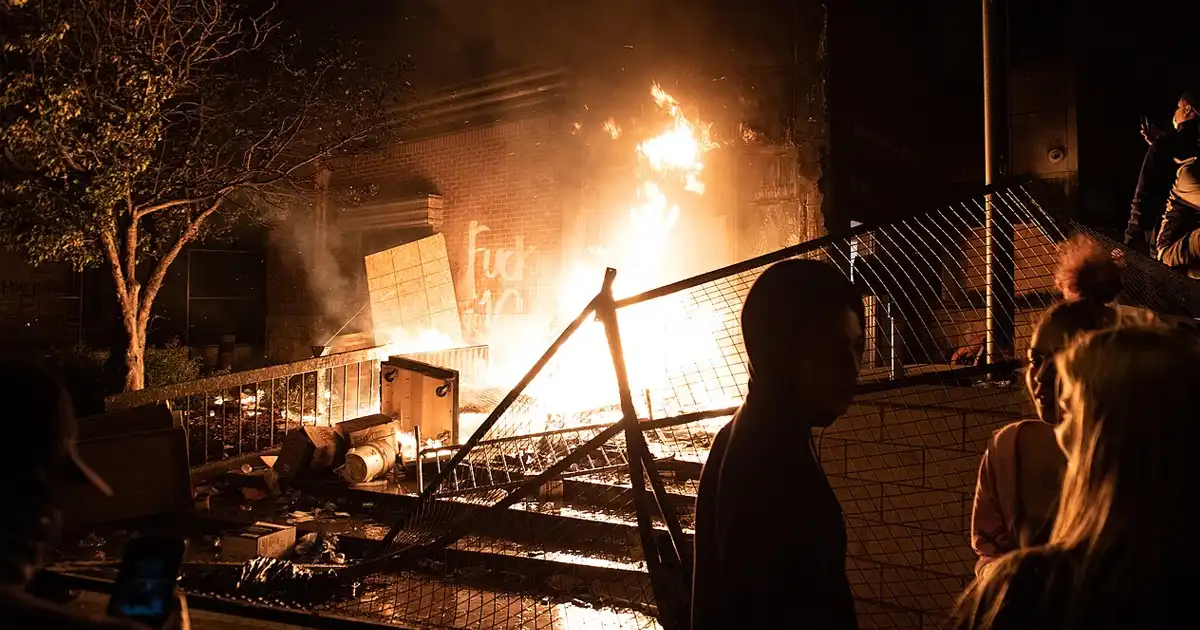
In the days after the murder of George Floyd by a Minneapolis Police officer in 2020, the rage of people in that city exploded, leading to chaos. That rage existed long before Floyd’s death, with its roots established in decades of dismissing resident complaints about police, tolerating brutality and corruption, a widespread disregard for constitutional rights, and failing to hold officers accountable.
Floyd’s murder didn’t cause the chaos in Minneapolis. His murder acted as a catalyst for the long-building rage of the city’s people.
Worcester’s long history of tolerating officer misconduct, cynical attempts at covering it up, and attacking residents who complain as nefarious created long-growing resentment. In response to the U.S. Department of Justice investigation, the city deployed its standard playbook of deny, deflect, and attack those who dare speak up, leading to growing tension.
The result is an environment where a controversial officer-involved death may be the catalyst for chaos in Worcester.
Mitigating the chance that these factors explode into rage and chaos, as happened in Minneapolis, requires a dedication to a process of healing the wounds of the past. There appears to be no interest in doing that work from within the city government.
Healing the wounds of the past requires addressing the violations of trust and the harm done that created those wounds. A city government and police department unwilling to engage in the hard work of reconciling the harms of the past aren’t seeking to earn trust from the residents of the city; they are making a cynical demand for it.
Minneapolis and Worcester Comparison
Travel from Worcester to the northern Midwest city of Minneapolis, Minnesota, takes around 20 hours by car and covers over 1300 miles. While the location and various cultural aspects are quite different, the weather has more similarities than many people from either city may wish to admit.
Worcester is a significantly smaller city, at 67 percent of the size of Minneapolis, with less than half the population. The population density in Worcester is 72 percent of that in Minneapolis. Minneapolis has a much higher violent crime, gun crime, and homicide rate, according to data from the Federal Bureau of Investigation (FBI).
As a larger city with a larger population, naturally the Minneapolis Police Department is larger, but has significant difficulties attracting new officers.
See the statistics below:
Sources
- Crime Stats – The Federal Bureau of Investigation (FBI)
- Population – U.S. Census Bureau
- Budgeted Officers, Minneapolis – City of Minneapolis FY 2025 budget
- Budgeted Officers, Worcester – City of Worcester FY 2025 budget
- Current Officers, Minneapolis – City of Minneapolis
- Current Officers, Worcester – The number of officers reported earlier this year, per a WPD spokesperson. The City of Worcester budget provides for 15 additional officers in FY 2026, which began July 1.
Obviously, Worcester and Minneapolis have significant differences. Comparing these two cities is imperfect, as is comparing any two cities.
One area the two cities have in common is being investigated by the federal government. The difference in how each city responded also has stark differences.
DOJ Pattern or Practice Investigations
Federal legislation passed and signed into law in 1994, the Violent Crime Control and Law Enforcement Act of 1994, often called “the ’94 Crime Bill,” enabled the U.S. Department of Justice (DOJ) Division of Civil Rights to conduct investigations to determine if a law enforcement agency has a pattern of violating the civil rights of the residents of its city, or has a practice of allowing those violations.
The law explicitly prohibits these investigations from revealing the identity of any law enforcement officer or any victim of police misconduct and says any information collected during these investigations to be used for statistical purposes only. The relevant laws are quite short:
34 U.S. Code § 12601 – Cause of action
34 U.S. Code § 12602 – Data on use of excessive force
Should the investigation reveal what officials in the civil rights division feel requires criminal investigation, they must refer that information to the DOJ’s criminal division for consideration and potential investigation.
During these investigations, DOJ personnel interview concerned residents, those with complaints against police officers, many members of the police department, and others. They also review case files, policy documents, and other evidence.
After the investigation concludes, the DOJ produces one summary report of its findings. To include information in the summary report, the DOJ uses the standard of reasonable cause to believe, one of the lowest standards of evidence. The report does not include names, as required by law, and does not seek to present criminal accusations against any individual.
The point of the investigation is to identify systemic problems in the department and implement corrective changes, not to identify wrongdoing of any individual officers.
Consent Decree
After the DOJ issues its summary report, it negotiates with the department investigated to agree on necessary reforms. The DOJ typically files a consent decree in federal court to hold the department accountable to make those changes.
Part of the agreement typically requires the department to hire an independent company, approved by the DOJ, for monitoring implementation. This can be quite costly.
Minneapolis Police Department
This section contains a selection of historical events, not a complete history.
Fighting against corruption and for civil rights has long included attempts at reform of the Minneapolis Police Department. One historian cites the violent assault of Ophelia Rice, a Black woman, in 1899 by Minneapolis Police officer Thomas Brit, a white man, as the starting point of modern police brutality in the city.
Minneapolis residents elected Hubert Humphrey as mayor in 1945, who ran, in-part, on a civil rights platform. Humphrey won election to the U.S. Senate in 1948, and became the 38th Vice President of the United States in 1964, serving with President Lyndon Johnson.
Samuel Freedman, author of “Into the Bright Sunshine: Young Hubert Humphrey and the Fight for Civil Rights,” wrote in the Washington Post in 2020 that Humphrey “made great progress in Minneapolis in parts of his civil rights agenda, he never came close to reforming the police department.”
Although the Minneapolis City Council established a civil rights commission to investigate civilian discrimination complaints in 1975, the city went outside the department to hire its chief of police in 1980, Tony Bouza, a former assistant chief in the New York Police Department. He served as chief until 1989 and faced significant conflicts with officers within the department.
Bouza wrote, “Expert Witness: Breaking the Policemen’s Blue Code of Silence,” published in 2013. In it, he says that in every agency where he worked, 98 percent of officers try to do their jobs and are, at times, heroic, while two percent are misfits. “The thumpers, grafters, malingerers, psychos, alcoholics, women beaters and bullies are the objects of my reform efforts,” Bouza said.
After a series of racial incidents in the summer of 2002, which included a police officer wounding 11-year-old Julius Powell while shooting at a charging dog, federal mediation produced a five-year agreement between Minneapolis police and community members. The agreement called for a Police-Community Relations Council, new training for officers, expanded use of non-lethal weapons, and increased diversity in hiring.
Then-Chief of Police Gary Olson, who served as chief from 1994 to 2003, said this about the process of negotiating the agreement:
“For us, and we also saw it with them, is we really began to look at community issues through the community eyes. Through the eyes of the everyday people out there doing everyday things in life to get by and have a living. And we really did — we changed.”
That change was not long-lasting.
In 2010, police responded to a YMCA for report of a man acting strangely. Police used a taser on a Black man, David Smith, 28, wrestled him to the ground, and handcuffed him while face down on a basketball court. An officer sat on Smith’s legs while another pressed his knee between Smith’s shoulders for four minutes and 30 seconds, before he became silent. Smith died of suffocation during a struggle with Minneapolis Police officers. The officers involved faced no discipline.
Smith’s case should sound familiar.
You can see information about additional controversial cases in Minneapolis.
Officer-Involved Shootings
Minneapolis provides data on officer-involved shootings on its open data portal. The page says the last update to the data occurred on Aug. 25, 2023. The most recent incident shown in the data occurred on Jan. 14, 2021. However, during the service of a no-knock warrant on February 2, 2022, Amir Locke, 22, died as the result of a Minneapolis officer-involved shooting.
Omitting the shooting that led to Locke’s death raises questions about the completeness of this data. However, the data provided paints a picture much different from the use of force issues seen in Worcester.
The data Minneapolis provides includes 90 officer-involved shootings from 2008 to 2020. Of those, 66 cases resulted in injury, including 29 fatal shootings.
The Minneapolis Police Department has long faced criticism for other practices outside of officer-involved shootings, including the way it treats those with mental health or behavioral disabilities, journalists, protestors, and others.
The Murder of George Floyd
Minneapolis police received a call just after 8 PM on May 25, 2020, and responded to a report of a forgery in progress. Responding officers removed George Floyd from his vehicle and placed him in handcuffs. While trying to move Floyd to a patrol car, he stiffened up and fell to the ground, face down.
Officer Alexander Kueng held Floyd’s back, Officer Thomas Lane held his legs, and Officer Derek Chauvin used his knee against Floyd’s neck for nine minutes and 29 seconds (corrected at trial from the originally reported eight minutes and 46 seconds). This includes Chauvin kneeling on Floyd for around four minutes after Floyd stops moving.
Floyd repeatedly pleaded with Chauvin to stop, telling him, “I can’t breath,” and then stopped moving and responding. Medics could not find a pulse at the scene. Medical personnel pronounced Floyd dead at the hospital. He was 46 years old.
Chauvin Discipline Record
Chauvin was the subject of 17 internal investigations over his 19 years with the Minneapolis Police Department. He was involved in four officer-involved shootings. Multiple accounts of Chauvin using similar techniques to those that led to Floyd’s death emerged, including one presented during the trial. At least two of those subjected to Chauvin’s brutality filed complaints.
Those 17 internal investigations resulted in two instances of discipline of Chauvin by the Minneapolis Police Department. Both were letters of reprimand.
Two Days of Protests, Then Chaos
A small protest occurred on May 25, 2020, hours after Floyd’s death. On May 26, thousands gathered. That evening, thousands of protesters marched to the precinct station where they believed Chauvin, Kueng, and Lang worked. Later in the night on the 26th, a smaller group of hundreds of protesters threw rocks and bottles, breaking a window at the precinct station. Fights broke out between those causing damage and other protesters attempting to stop them.
During this time, Hennepin County Attorney (the equivalent of what we call a district attorney) Mike Freeman issued statements saying his office was reviewing the evidence during this time. Meanwhile, Chauvin sat at home with state police protection, despite video footage showing Chauvin’s actions. Any civilian would be sitting in a cell.
All the signs appeared to point to no charges against Chauvin were to come, like in many previous cases across the country.
Protests resumed on May 27, 2020, and remained peaceful throughout the day. Shortly after 6 PM, at around the same time protestors were again throwing things at the precinct where they believed the officers involved in Floyd’s death worked, a man carrying an umbrella used a hammer to break windows at an AutoZone store, then spray-painted “free shit for everyone” on the store.
Police later said the man belongs to the Aryan Cowboy Brotherhood, a neo-Nazi prison gang with ties to organized crime. That group allegedly has ties to the Hells Angels motorcycle club. Police said his motivation was to incite violence and racial animosity.
Violent protests began that night across a section of Minneapolis and spread to some suburban communities. The following day, May 28, 2020, looting, arson, and other chaos occurred and continued for several days, through May 31.
Freeman didn’t announce charges until May 29, after two days of chaos in parts of the city.
Nobody likes riots, looting, fires, and the other destruction that occurred in Minneapolis during that week. However, it is undeniable that after two nights of chaos, Freeman finally acted and charged Chauvin. The state attorney general eventually took the case over and led the prosecution of Chauvin. A jury convicted Chauvin of murder, which led to a sentence of 22.5 years in state prison.
After Floyd’s death, the largest protest for civil rights in human history took place in the summer of 2020, largely in the name of Black Lives Matter (BLM). According to Armed Conflict Location & Event Data (ACLED), a nonprofit that collects and provides data on reported political violence and protest events around the world, over 10,33o demonstrations took place over 2,730 locations that include all 50 states and Washington D.C.
ACLED found that 94 percent of those protests involved no violence or destructive activity. It also found that when responding to BLM -linked demonstrations, authorities used force at over 51 percent of those events.
By the time the protests faded in Minneapolis, two had died, police arrested 604, and 1500 properties sustained damage, including over 150 structure fires. This resulted in over $500 million in damage, according to multiple sources.
DOJ Pattern and Practice Investigation Report on Minneapolis
Just short of nine months after the murder of George Floyd, the DOJ announced it would open a pattern or practice investigation into the Minneapolis Police Department. It issued its report on June 16, 2023.
The report spans 92 pages. In the executive summary, the DOJ highlighted its findings in its investigation of the MPD:
“The Department of Justice has reasonable cause to believe that the City of Minneapolis and the Minneapolis Police Department engage in a pattern or practice of conduct that deprives people of their rights under the Constitution and federal law:
- MPD uses excessive force, including unjustified deadly force and other types of force.
- MPD unlawfully discriminates against Black and Native American people in its enforcement activities.
- MPD violates the rights of people engaged in protected speech.
- MPD and the City discriminate against people with behavioral health disabilities when responding to calls for assistance.”
The DOJ investigation report on the Minneapolis Police Department makes 28 “recommended remedial measures” at the end of the report.
Negotiated Reforms
After the release of the DOJ report on the Minneapolis Police Department on June 16, 2023, negotiations led to an agreement. The DOJ filed the contents of that agreement as a consent decree in U.S. Federal Court in Minnesota on Jan. 6, 2025, the same day it was approved by the Minneapolis City Council.
According to Cornell Law School, a consent decree “is a decree made by a judge with the consent of all parties.” When related to pattern and practice investigations, the agreement allows the municipality to avoid accepting responsibility for any wrongdoing while creating a plan for reform with implementation overseen by the court. Once approved by a judge, the consent decree binds the city to the agreement it reached with the DOJ, including third-party monitoring of implementation.
The 171-page consent decree includes a wide range of subjects where the department agreed to make changes.
The sections of the consent decree are:
- Community Engagement
- Use of Force
- Fair and Impartial Policing
- First Amendment
- People with Behavioral Health Disabilities
- Interactions with Youth
- Misconduct and Accountability
- Policy Development Team
- Supervision
- Body-Worn Cameras
- Training
- Secondary Employment
- Performance Evaluations and Promotions
- Recruitment and Hiring
- Officer and Employee Assistance and Support
- Data Management
- Implementation and Monitoring
This document is heavy on policy in a wide range of areas, including accountability for implementation.
President Donald Trump’s inauguration took place on Jan. 20, just 14 days after the filing of the consent decree in court.
Leadership for Reform in Minneapolis
Since the Trump Administration took office, the DOJ requested and received three 30-day stays of court proceedings on the Minneapolis consent decree, leaving the document waiting for approval by the judge.
Despite the hold on a judge approving the agrement, Minneapolis began complying with it, including selecting and engaging with an independent monitor approved by the DOJ.
On May 20, the independent monitor chosen to monitor compliance with the consent decree, Effective Law Enforcement for ALL (ELEFA), issued its second report on Minneapolis’ progress on police reform. From the executive summary of that report:
“Although the City and MPD have not met all the goals targeted for ‘Year one’ of the Evaluation Plan, the IE Team’s view is that MPD and the City have made important and demonstrable progress towards meeting the Settlement Agreement and the Evaluation Plan’s foundational goals. Based on the IE Team’s collective experience and knowledge of court enforceable police reform agreements across the country, the City and the MPD have made more progress toward building a foundation for sustainable reform in the first year of monitoring than nearly any other jurisdiction.”
On May 21, days before the 5-year anniversary of Floyd’s murder, the DOJ submitted a motion to dismiss the consent decree to the court. Minneapolis opposed the DOJ’s motion.
On the same day, the City of Minneapolis released a statement, which quotes Mayor Jacob Frey:
“We’re doing it anyway,’ said Mayor Jacob Frey. ‘We will implement every reform outlined in the consent decree—because accountability isn’t optional. Our independent monitor has lauded the meaningful progress we’ve made under the state settlement agreement, and the public can count on clear, measurable proof that our reforms are moving forward.”
It also included a statement from Minneapolis Police Chief Brian O’Hara:
“I came to Minneapolis to lead this department through historic reform. As the one-year ELEFA report shows, MPD had already accomplished more in one year than any other city under a consent decree. But we’re not stopping there,’ said Minneapolis Police Chief Brian O’Hara. ‘We will go beyond what is required and deliver real, lasting change for our residents. Our goal is to make MPD the best police department in the country and provide the people of Minneapolis the excellent policing service they deserve.”
The city also held a press conference on May 21 in response to the DOJ motion to dismiss the consent decree.

On May 27, the judge granted the motion to dismiss,, releasing Minneapolis from the agreement and the mandated independent oversight of implementing reforms.
Worcester and the DOJ Investigation
On November 15, 2022, the DOJ announced its investigation of the Worcester Police Department. It issued its report on Dec. 9, 2024.
The 43-page report highlights in its executive summary the main findings:
“The Department of Justice has reasonable cause to believe that the Worcester Police Department and the City of Worcester engage in a pattern or practice of conduct that deprives people of their rights under the Constitution and federal law:
- WPD uses excessive force that violates the Fourth Amendment. Officers unreasonably deploy Tasers, use police dogs, and strike people in the head. Officers rapidly escalate minor incidents by using more force than necessary, including during encounters with people who have behavioral health disabilities or are in crisis.
- WPD engages in outrageous government conduct that violates the constitutional rights of women suspected of being involved in the commercial sex trade by engaging in sexual contact during undercover operations. This violates the Fourteenth Amendment’s due process clause.”
The DOJ investigation report of the Worcester Police Department makes 19 “recommended remedial measures” at the end of the report.
Worcester Seeks Bandaids as New Federal Administration Retreats
Upon President Donald Trump taking office in January 2025, his administration clearly stated it would end the DOJ investigating local police departments.
On May 21, the DOJ Civil Rights division formally announced it would dismiss the lawsuits filed during the previous administration against Louisville, Kentucky, and Minneapolis.
It also said:
The Civil Rights Division will also be closing its investigations into, and retracting the Biden administration’s findings of constitutional violations on the part of, the following additional local police departments:
- Phoenix, Arizona
- Trenton, New Jersey
- Memphis, Tennessee
- Mount Vernon, New York
- Oklahoma City, Oklahoma
- Louisiana State Police”
Trump’s administration has yet to mention the investigation into Worcester.
On May 23, the Worcester Telegram & Gazette reported that a spokesperson for U.S. Attorney Leah Foley said about the report on the Worcester Police Department that, “As it currently stands, nothing has changed with the status of the findings report.”
However, city officials tell This Week in Worcester that contact between the DOJ and the city has stalled for months. Officials in U.S. Attorney Foley’s office say the status remains unchanged.
Meanwhile, it is incredibly clear that the controlling majority of the Worcester City Council has no desire to address anything within the police department.
Inaction from City Government
Hours before the release of the DOJ report on Worcester on Dec. 9, 2024, the private attorney representing the city in its dealings with the DOJ, Brian Kelley of the law firm Nixon Peabody, released a statement full of disinformation. I’ve written about this statement previously.
One of Kelley’s claims, that the DOJ rushed out the report prior to the change in federal administrations, is objectively false, as This Week in Worcester previously reported. Kelley also criticized the report for not naming names, which is explicitly prohibited by federal law. He should know this, as he’s a longtime federal prosecutor.
The city council first took up the DOJ report during its meeting on Dec. 17, 2024. Some councilors said it was time to “roll up our sleeves, ” while another said that heads would roll. That same night, councilors voted unanimously to hold five special city council meetings on the DOJ report.
For a moment, it fell like some councilors were finally ready to acknowledge there is a problem inside the department. That feeling didn’t last long.
The Worcester City Council has done nothing of substance since the release of the report in December 2024. Of the five special meetings they voted to have, they held one meeting on the same night as a regularly scheduled meeting, which is by definition not a special meeting.
Chief of Police Paul Saucier has answered questions from councilors for extended periods on two separate occasions. Councilors Khrystian King and Etel Haxhiaj asked significant questions of the chief. The rest of the councilors asked softball questions, except for Councilors Candy Mero-Carlson and Donna Colorio, who did not ask questions or make a statement at all.
Police Union Opposition to Reform
Around 200 Worcester Police officers attended the Worcester City Council meeting on Dec. 17, 2024. Some of those who spoke expressed total rejection of the report and criticized it for not naming names. Federal law prohibits naming names in the DOJ pattern and practice report.
Multiple Worcester Police officers and officials voiced opposition to a consent decree, while others demanded that elected city officials “hold the line,” or used similar phrases. Some included veiled threats to councilors about their political future if they didn’t comply.
Some claimed the entire report is a lie, despite two incidents in which widely viewed video evidence exists. I covered both cases in the last piece of this series, linked at the top of the page. Those claims by some continue until today.
No Substantive Reform Proposals
Upon the release of the report, City Manager Batista released a statement which outlined the following actions he said his administration was taking in response to the report.
- “Charging the new Executive Office of Diversity, Equity and Inclusion (EODEI) and WPD with a number of priority initiatives, including to work cooperatively with the Human Rights Commission on training and policy review.”
- Establishing a hotline “for members of the public to report any alleged misconduct by police officers. This hotline will be managed outside of the WPD by the Investigations Division within the EODEI. Investigators will examine all evidence and testimony independently and without bias.”
- The Training Division within the EODEI will lead trainings, seminars, and workshops relative to behavioral health, implicit bias, and additional topics, all of which will align with and inform written policy within the WPD.
Creating a new policy is time-consuming and difficult because of legal concerns and a process that involves several bodies and many people, including the Human Rights Commission. It takes a lot of work.
While additional training and policy enhancements are good, enforcement of those policies is critical. The inherent conflict of interest of police department personnel investigating those an investigator may have worked with for decades is obvious.
No one will talk about enforcement, however.
The internal investigations division within the Worcester Police Department, the Bureau of Professional Standards (BOPS) has a significant history of inept or corrupt investigations. There are signs the BOPS division is improving under Chief Saucier (more to come soon). That conflict of interest remains.
A hotline for complaints is a baby step. While EODEI investigates claims it receives, the responsibility to determine facts and discipline remains internal at the police department.
If policy enforcement within the department improves with Chief Saucier in place, and I think it will, the penalties will be weak and unlikely to exceed a five-day suspension unless a criminal felony conviction takes place. Any penalty that exceeds five days enables the officer to appeal to the Civil Service for review or to force the city into mandatory arbitration provided by the police union contracts with the city.
The Massachusetts Civil Service system, established in the late 1800s, is a standardized testing system that holds tremendous weight in determining hiring and promotions of police officers. It has the authority to force police departments to put officers it fired back on the street. The city has opted out of the civil service system only for the ranks of chief and deputy chief.
Regardless of the behavior of any officer, a felony conviction is unlikely, as the police department sending charges to the district attorney on one of its own is almost zero.
Writing new policies changes nothing without enforcement. Even in circumstances like an officer committing apparent perjury, like Kerry Hazelhurst in the Natale Cosenza case (see part 4, linked at the top of this page), nothing of substance will happen. When an officer apparently conspires after the fact with a man who fired gunshots on a city street, like Thomas Duffy in 2016 when he enabled the brother of a WPD officer who fired a gun on a city street to escape lawful detention, it gets washed away.
In other words, the worst of the worst will continue to get a pass.
New Policies and a Webpage
The city launched a webpage to provide what it describes as transparency into the accomplishments of the department related to recommendations in a racial equity audit it received in March and the DOJ report.
During a city council meeting on April 29, in response to questioning by City Councilor At-Large Khrystian King, both City Manager Batista and Chief Saucier said there were parts of the report they agreed with.
These admissions came days after the police department released a nearly 5000 word statement it called an analysis of the DOJ report, but which included only its objections to the report. Councilor King requested a report that included both the department’s agreements and disagreements with the report, and made that point during the April 29 meeting. Despite King asking that the department provide the other part of his request on areas where the department agreed with the DOJ report, the administration has not provided such analysis in writing.
Outside of comments made during that same meeting, the administration has never publicly acknowledged anything in the report it finds justified.
A Tale of Two Very Different Departments
There is little comparison between the history of the Minneapolis Police Department and the Worcester Police Department. The rate of officer-involved shootings and the associated loss of life in Minneapolis is nothing like the experiences of Worcester residents.
Officer-involved shootings in Worcester are rare. The last, in April 2021, involved a man, Phet Gouvonvong. who claimed to have a bomb. This Week in Worcester published a review of the incident, including information provided by a use of force expert with no connection to Worcester, who determined the use of force justified.
The previous officer-involved death in Worcester occurred in July 2015 after a Worcester officer deployed a taser on Wilmer Delgado Sobá, of Fitchburg, who later died at a hospital.
Given the proliferation of illegal firearms in the city over the last several years, the department deserves credit for largely avoiding the fatal use of force.
However, the co-signing of non-fatal, yet disgusting behavior in Worcester by public officials, through their inaction, has caused tremendous harm.
There is also little comparison between the leadership exhibited in Minneapolis by its mayor and chief of police, and the leadership in Worcester. After decades of inaction, Minneapolis leaders have taken the issue head-on and moved strongly toward reform.
For example, Minneapolis fired two and suspended eight for their actions during the unrest after the murder of George Floyd.
When a small group of protesters in Worcester marched on Main Street in 2020, what began as a march turned into an altercation that resulted in an untold number of non-lethal projectiles fired by police. Police arrested one photojournalist for nothing. Another, a contributor to This Week in Worcester, first checked in with police and asked if he could observe from a specific area away from protesters. After being told that area would be acceptable, officers fired projectiles at him soon after he reached that location. At least one officer stomped on a phone, while another man arrested for saying a word an officer didn’t like had his phone stolen.
There were several examples of unacceptable behavior that night. BOPS, true to form, found no policy violations during that incident and protected the officers involved, reinforcing their behavior as acceptable.
The Damage Done
In Worcester, a significant portion of residents are, at best, distrustful of the police. Too many times, officers who committed wrongdoing received protection and support, elevating the person who committed the misconduct above the law.
The city’s reaction to the DOJ report further undermined the department’s credibility with many. Residents saw what should have been an opportunity for the police department to repair its relationship with the public flushed away.
All to defend “the department” for what?
- To demand that every police officer knows what every other officer ever did on every city street, in every home, in every business, and in every vehicle, so the claims in the report are lies.
- To claim that commercial sex workers in the city, who experience attempts to be hustled daily, are getting hustled by fake cops with ease. The idea they don’t know who the cops are is laughable.
- To claim that an investigation prohibited by law from naming names is illegitimate because it didn’t name names.
- To claim that boldfaced lies told while under oath that were instrumental in sending an innocent man to prison for 16 years was doing nothing wrong.
- To claim that changing out one person, the chief of police, miraculously solves a culture that has permitted wrongdoing for decades.
- To claim that the entire report is a lie, when video evidence exists of at least two incidents referred to in it.
- To claim that there are new written policies, so everything is just fine.
These are lies. Capital L lies.
The most absurd claim, which would be funny if it weren’t so harmful and dangerous, highlights that the DOJ investigation covered 2018 to 2022. That, apparently, is ancient history.
How many individuals remain incarcerated today for crimes committed between 2018 and 2022? Is anyone arguing for the release of those individuals? No? Not that ancient history then, is it?
Regardless of if you listen to those who call it all lies, those who call it mostly lies, or others with wild conspiracy theories about the Biden Administration launching a deep state conspiracy against Worcester (absolutely laughable), the police department says it is all irrelevant. They claim they were already doing all the things within the “recommended remedial measures” provided by the DOJ in the report.
We are supposed to believe that although the DOJ singled out Worcester to engage in a conspiracy to attack every individual within the Worcester Police Department with lies, the DOJ’s recommendations were so dead on accurate that the department had independently made the same assessments and begun making all the same changes before the release of the report.
They really think we are stupid enough to believe this absolute trash.
The most aggressive claim by some, including NEPBA Local 911 (patrolman’s union) President Thomas Duffy, asserts that all claims about sexual assault in the report are false and part of an effort to disparage the good men and women of the Worcester Police Department.
Former IPBO Local 504 (police officials union) Vice President Anthony Petrone repeatedly made claims that interns wrote the DOJ report.
That those who repeat these lies with such ease have the power to write an incident report against a resident of this city as evidence in court is terrifying.
Using Bouza’s two percent rule, 98 percent of officers in Worcester are good. Some are great. Worcester elevates its two percent to the detriment of the 98 percent, the department, the city, and its people.
The Big Gamble
City leadership is gambling with your safety while Worcester sits a catalyst event away from chaos.
While the city government cowers from meaningful police reform, tension has increased, further harming the police-public relationship, similar to that relationship in Minneapolis.
That may not have been plainly visible in Minneapolis until a catalyst moment, George Floyd’s murder, saw that tension boil over onto city streets.
While the severity of behavior by police in Minneapolis far exceeds that of police in Worcester, many elements of the distrust and resentment are present.
What Chauvin and other officers did to George Floyd was so vile and disgusting that residents who aren’t politically active or aware were out in protest.
People experienced in protesting typically are not the cause of rioting, except for a small contingent who use protests as cover for their violence. Activists engage in protests far more frequently, often with disparate turnout numbers, depending on the issue.
When people who don’t regularly read or even watch the news, and aren’t engaged in politics, reach a level of anger that they are in the streets, the level of volatility can more easily reach a boiling point.
Let’s suppose for a moment that after all that has happened in Worcester, including the city’s response to the DOJ report, a fatal officer-involved encounter occurs while the city government continues to cower from meaningful police reform. If the legitimacy of the lethal force used is questionable or worse, we may get a close-up view of what occurred in Minneapolis.
Mitigating that risk requires a consistent effort at improving the relationship between the public and the police. Repairing that relationship will never happen without reconciling the past, taking responsibility as a city government, and charting a substantive reform plan.
I am completely convinced, nearly nine months after the release of the DOJ report, that the leadership in this city has no desire to do this work. They want to keep punting while they wait for us to forget.
Every day of inaction is a gamble with your property, your business, your safety, and your health. All to protect the two percent of “thumpers, grafters, malingerers, psychos, alcoholics, women beaters and bullies.”